LinkBack URL
 About LinkBacks
As always ultimately the market decides. The problem is that there are a series of markets
Mobile phones- dominated by ARM
Tablets - likely to be dominated by ARM
Notebooks/laptops - power consumption is normally more important than raw power unless really a desktop in disguise
HTPC - (come back to the below)
low end business use - CPUs and GPUs already more powerful than needed. Price and power usage more important
high end business use - Intel wins this with the i5 by miles
ultra high end and gaming - no one cares about the IGP (and AMD do not have any competitor to the i5/i7)
So really AMD only have a realistic shot at HTPC, laptops and low end desktop markets.
In HTPC market their offering is still clearly better than Intel when relying on IGP, it is not just about raw power but the technical side of delivery correct frame rate, surround sound either through HDMI, upscaling and downscaling.
Laptops, key issue is power usage versus power of CPU/GPU. No matter how you look at the i3 is a more compelling package right now, but AMD are close enough to be a serious competitor particularly at low end laptops.
Low end business/desktop use - either AMD or Intel have really good packages. Basically it is down to price and marketing. Intel can steamroller AMD any time they want, but unlikely to do so because it eats into their margins. AMD will continue to have a reasonable market share.
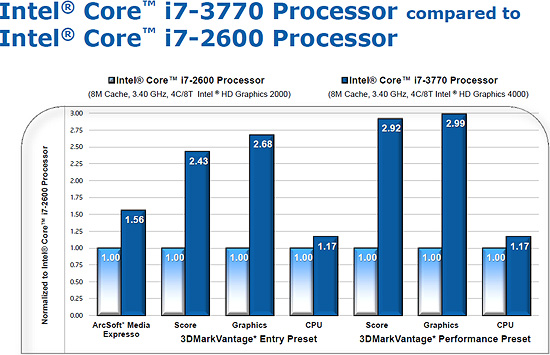
This is a long ramble down to a simple point. The new numbers are impressive but exactly what is the point of them. Until such time as an IGP can replace a discrete graphics card with say power of an NVidia 560, then the extra power is useless for high end business use or gamers because the IGP is still not good enough and for users with less power needs, the existing IGPs are already good enough

 Originally Posted by DELETED